
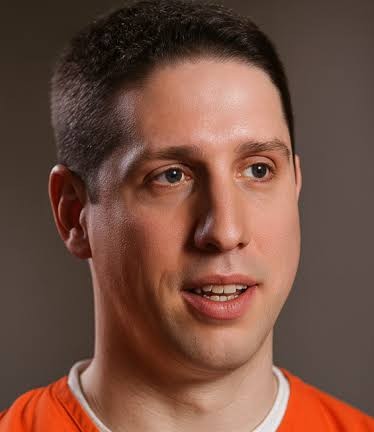
Max Ray Butler, who also went by Max Vision and the online alias "Iceman," ran a penetration-testing and "ethical hacking" business starting in 1997. In May 1998, at age 27, he exploited a newly discovered UNIX vulnerability to break into computers at multiple U.S. Department of Defense, Department of Energy, and university sites, including Brookhaven National Laboratory, Argonne National Laboratory, Lawrence Berkeley National Laboratory, and UC Berkeley, attacking 13 UC computers and nine Berkeley Lab machines and launching at least one attack from a U.S. Air Force computer. The intrusions were detected by the Bro network-monitoring software, developed at Lawrence Berkeley Lab by Vern Paxson. Butler was charged on March 23, 2000 in federal court in San Jose with 15 counts of computer hacking. According to the San Francisco Chronicle, he had also been a confidential source for an FBI Computer Crime Squad for two years before his arrest.
Butler later ran the cybercrime forum CardersMarket, which had roughly 4,500 members at its peak. He was arrested by the U.S. Secret Service on September 5, 2007, and pleaded guilty to wire fraud in connection with hacking financial institutions and credit card processing centers, stealing more than 1.8 million credit card account numbers, and generating approximately $86.4 million in fraudulent charges. On February 12, 2010, he was sentenced in San Francisco to 13 years in federal prison followed by 5 years of supervised release, and ordered to pay $27.5 million in restitution; the FBI described the 13-year term as the longest U.S. federal sentence for computer hacking to that date. A co-defendant, Christopher Aragon, was also charged in the case.
While serving that sentence at the Federal Correctional Complex in Oakdale, Louisiana, Butler (using the name Max Ray Vision) was charged in late 2018 with running a contraband-smuggling operation from inside the prison. Prosecutors alleged that beginning around December 2015 he used a smuggled cell phone to access stolen debit card numbers, sent cash to other inmates' accounts via Western Union and Moneygram, and directed a former cellmate to buy a drone that was used, on April 24, 2016, to fly cell phones, tobacco, and drugs over the prison's fences into the recreation yard.


